Your home office is more than just a workspace—it’s where your ideas come to life and your focus sharpens. But have you ever noticed how the right lighting can change everything?
Ambient lighting, when placed correctly, can boost your mood, reduce eye strain, and keep you energized throughout the day. You’ll discover simple, effective ways to position ambient lighting that transforms your home office into a comfortable, productive haven. Keep reading, and you’ll learn how to light your space in a way that makes work feel less like a chore and more like inspiration.
Benefits Of Ambient Lighting
Ambient lighting helps create the right mood in your home office. It provides a base light that fills the room evenly.
Good ambient lighting supports your work by making the space more inviting and less tiring for your eyes.
Enhancing Focus And Productivity
Ambient lighting reduces harsh shadows and glare on your screen. This helps you stay focused on tasks for longer.
- Even lighting cuts down distractions caused by flickering or uneven brightness.
- It creates a calm environment that supports concentration.
- Good lighting helps keep your energy levels steady throughout the day.
Creating A Comfortable Atmosphere
Soft ambient light makes your workspace feel cozy and welcoming. This helps reduce stress during work hours.
Tips for Comfortable Lighting:
- Use warm light bulbs for a relaxing feel.
- Add dimmers to adjust brightness to your mood.
- Position lights to avoid glare on screens and walls.
Reducing Eye Strain
Ambient lighting helps balance the light in the room. This lowers the contrast between your screen and the surrounding area.
| Eye Strain Cause | How Ambient Lighting Helps |
| Bright screen in dark room | Soft room light reduces contrast |
| Flickering or harsh lights | Even light prevents glare |
| Long hours of work | Comfortable light eases eye fatigue |
Choosing The Right Lighting Type
Lighting affects how you work in your home office. Good lighting helps reduce eye strain and keeps you alert.
Choosing the right type of light makes your workspace more comfortable and productive.
Warm Vs Cool Light
Warm light has a yellowish tone and feels cozy. Cool light looks bluish and feels bright and clear.
Warm light is good for relaxing areas. Cool light helps you stay focused in workspaces.
- Warm light: soft, relaxing, ideal for evening work
- Cool light: sharp, energizing, best for daytime tasks
Led Vs Incandescent
LED bulbs use less energy and last longer than incandescent bulbs. They come in many colors and brightness levels.
Incandescent bulbs give a warm light but use more power. They do not last as long as LEDs.
- LED: energy-efficient, long-lasting, versatile
- Incandescent: warm glow, shorter life, higher energy use
Smart Lighting Options
Smart lights let you control brightness and color with your phone or voice. They can change based on the time of day.
Using smart lights helps create the right mood and saves energy by turning off when not needed.
- Adjust brightness for different tasks
- Change color temperature to suit your mood
- Set schedules to save energy
Ideal Placement Strategies
Ambient lighting helps create a comfortable home office space. Proper placement improves focus and reduces eye strain.
Choose lighting that spreads light evenly. Avoid harsh shadows and bright spots to keep your workspace inviting.
Ceiling Fixtures And Recessed Lights
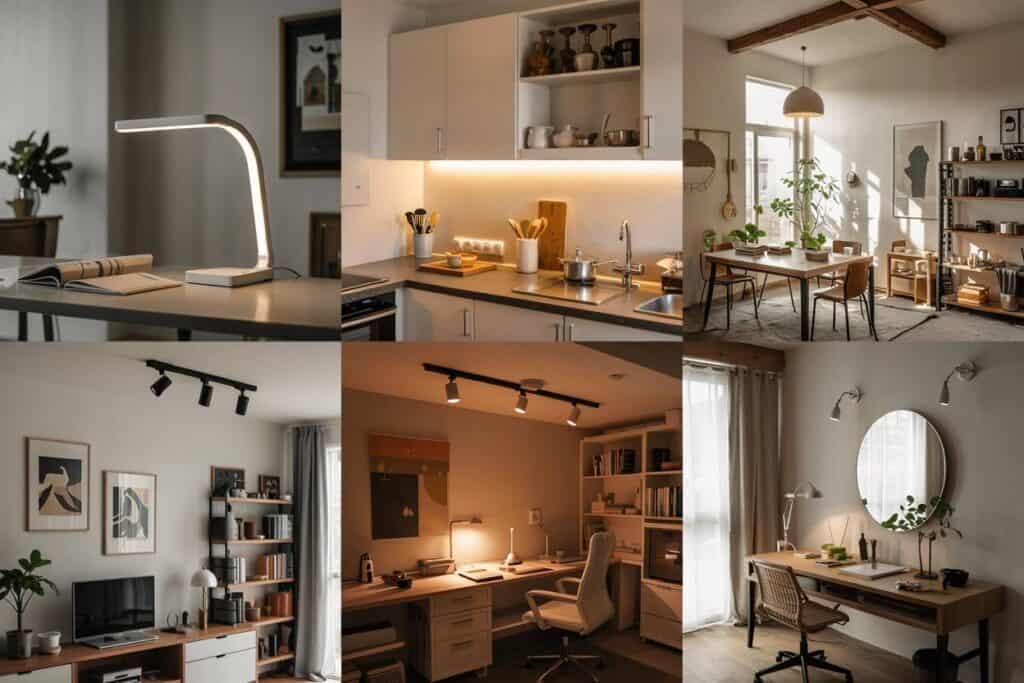
Ceiling fixtures give general light to the whole room. Place them in the center to spread light evenly.
Recessed lights work well in rooms with low ceilings. Space them evenly to avoid dark spots.
- Install ceiling fixtures in the middle of the room
- Use recessed lights spaced 4 to 6 feet apart
- Choose dimmable options for adjustable brightness
Desk And Task Lighting
Task lighting helps you see your work clearly. Place desk lamps to the side opposite your writing hand.
Adjustable lamps let you direct light where you need it. Use warm light bulbs to reduce eye fatigue.
- Put desk lamps on the left if you are right-handed
- Use adjustable arms for precise light direction
- Choose bulbs with soft, warm tones
Wall Sconces And Accent Lights
Wall sconces add soft light and style to your office. Place them at eye level on side walls for gentle illumination.
Accent lights highlight artwork or shelves. Use them to add depth and interest without glare.
- Mount sconces about 60 to 66 inches from the floor
- Use sconces on side walls, not directly behind the desk
- Place accent lights to highlight decor or plants

Credit: www.designcafe.com
Lighting Design Tips For Style
Good lighting makes your home office look stylish and feel comfortable. It also helps you focus and work better.
Using the right lighting design can change the mood of your workspace. Here are some tips to place ambient lighting smartly.
Layering Light Sources
Layering light means using different types of lights together. This creates a balanced and inviting space.
Mix ambient, task, and accent lights to brighten your room well. This stops harsh shadows and adds depth.
- Ambient lights give overall brightness
- Task lights focus on your desk or work area
- Accent lights highlight artwork or plants
Using Dimmers And Controls
Dimmers let you adjust light brightness easily. This helps set the right mood for work or breaks.
Smart controls let you turn lights on and off without moving. You can also set timers for energy saving.
- Use dimmers to reduce glare on screens
- Set timers to turn off lights when not needed
- Try smart bulbs to control lights with your phone
Incorporating Decorative Fixtures
Decorative fixtures add style and personality to your office. They can be both pretty and practical.
Choose fixtures that match your room’s theme. Look for shapes and colors that make the space feel cozy.
- Use pendant lights for a modern look
- Choose lamps with interesting shapes or colors
- Try wall sconces for soft side lighting
Common Mistakes To Avoid
Credit: www.ledyilighting.com
Maintenance And Upgrades
Ambient lighting is key for a comfortable home office. Proper maintenance and upgrades ensure efficient lighting.
Regular care keeps your lighting system working well. Upgrading can save energy and add modern features.
Regular Cleaning And Bulb Replacement
Dusty lights reduce brightness. Clean your fixtures regularly to keep them shining.
Replace bulbs when they dim or flicker. Check bulb type for best results.
- Use a soft cloth to clean fixtures
- Turn off power before bulb replacement
- Recycle old bulbs properly
Upgrading To Energy-efficient Options
Switching to LED bulbs saves energy. They last longer and provide consistent light.
Consider energy-efficient fixtures. They reduce electricity bills and are eco-friendly.
- Check for LED compatibility
- Look for Energy Star ratings
- Consult a professional for installation
Integrating Smart Home Systems
Smart lighting offers convenience. Control lights with your phone or voice commands.
Set schedules for automatic on/off times. This saves energy and fits your routine.
- Choose a compatible smart hub
- Download the app for easy control
- Experiment with different lighting scenes

Credit: www.designcafe.com
Frequently Asked Questions
What Is The Best Ambient Lighting For A Home Office?
The best ambient lighting for a home office is soft, diffused light. It reduces eye strain and creates a comfortable workspace. LED lights with adjustable brightness and warm color tones work well to maintain focus and productivity throughout the day.
Where Should Ambient Lights Be Placed In A Home Office?
Place ambient lights overhead or behind your desk to avoid glare. Use wall-mounted fixtures or floor lamps to evenly spread light. Position lights away from screens to prevent reflections and create a balanced, inviting atmosphere for work.
How Does Ambient Lighting Affect Home Office Productivity?
Ambient lighting boosts productivity by reducing eye fatigue and improving mood. Proper lighting keeps you alert and focused. It creates a comfortable environment, which enhances concentration and overall work performance.
Can Ambient Lighting Reduce Eye Strain In Home Offices?
Yes, ambient lighting reduces eye strain by providing consistent, soft light. It minimizes harsh shadows and glare on screens. This helps protect your eyes during long work hours and improves visual comfort.
Conclusion
Good ambient lighting helps you work better at home. Place lights where they reduce shadows and glare. Soft, even light keeps your eyes comfortable all day. Try mixing ceiling lights with desk lamps for balance. Adjust brightness to match your tasks and mood.
Small changes in lighting can make a big difference. Create a space that feels bright and calm. Your home office will become a place you enjoy. Simple steps lead to better focus and less eye strain.
