
Creating a small home office can feel challenging, but it doesn’t have to be. You want a space that boosts your focus and sparks your creativity, without overwhelming your room.
Imagine stepping into your own cozy, well-organized workspace where everything you need is within reach. You’ll discover simple and smart small home office design ideas that make the most of your space. Whether you work from home occasionally or every day, these tips will help you create a setup that feels just right for you.
Keep reading to transform your small area into a productivity powerhouse.
Maximizing Limited Space
Creating a small home office can be a challenge. You need to fit all essentials without clutter.
Smart choices help you use space well. This guide shows ideas to make your office work better.
Choosing The Right Furniture
Select furniture that fits your space and needs. Avoid bulky items that crowd the room.
- Pick desks with built-in storage
- Use chairs that tuck under the desk
- Choose light colors to open the room
- Opt for glass or slim materials
Utilizing Vertical Storage
Vertical space is often unused. Shelves and hooks keep things off the desk.
| Storage Type | Use | Benefit |
| Wall Shelves | Books, files | Frees desk space |
| Pegboards | Tools, notes | Easy access |
| Tall Cabinets | Supplies, printer | Maximizes floor to ceiling |
Incorporating Multi-functional Pieces
Furniture with more than one use saves space and adds value.
- Desks with drawers and shelves
- Ottomans that store items inside
- Fold-out tables for extra workspace
- Chairs that convert to guest seating
Lighting For Productivity
Good lighting helps you focus and work well in your small home office. It reduces eye strain and keeps you alert.
Use different types of lighting to create a bright and comfortable workspace. This guide covers natural light, task lighting, and ambient lighting ideas.
Natural Light Benefits
Natural light is the best source for your home office. It boosts mood and energy. Place your desk near a window to get sunlight during the day.
Sunlight helps keep your body clock on track. It also makes colors look clearer and reduces the need for artificial lights.
Task Lighting Options
Task lighting focuses light where you need it most. It helps you see details and work without straining your eyes.
- Desk lamps with adjustable arms
- LED lights with bright, cool tones
- Clip-on lights for shelves or monitors
- Under-cabinet lights for extra brightness
Choose lights with switches or dimmers to control brightness. Position the light to avoid shadows and glare on your work surface.
Ambient And Accent Lighting
Ambient lighting fills the room with soft, even light. Accent lighting adds style and highlights parts of your office.
| Lighting Type | Purpose | Examples |
| Ambient | General room light | Ceiling lights, floor lamps |
| Accent | Decorative or focused light | Wall sconces, LED strips |
Use warm light colors for ambient lighting to create a cozy feel. Accent lights can use colors or shapes to add interest to your space.
Color Schemes And Decor
Designing a small home office needs smart color and decor choices. The right colors and decorations make the space feel bigger and more inviting.
Simple and clear design helps you stay focused and comfortable while working. Small touches can improve the room without making it crowded.
Calming Color Palettes
Choose soft colors to create a calm work area. Light blues, gentle greens, and warm neutrals help reduce stress and improve focus.
Use one or two main colors and add white or cream to keep the room bright and open. Avoid too many dark colors that shrink the space.
- Soft blues calm the mind
- Light greens connect you to nature
- Warm beige adds coziness
- White or cream keeps the space open
Inspiring Wall Art
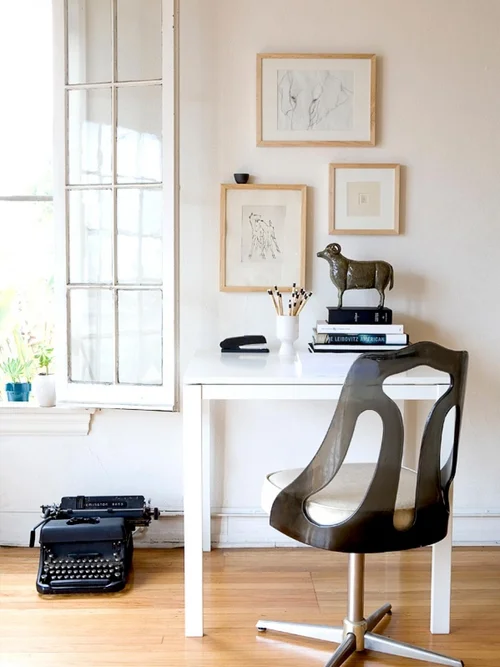
Wall art makes your office more inspiring without taking up space. Choose pieces that motivate you and match your color scheme.
Use simple frames and avoid large or very busy artwork. Small prints or quotes add personality and keep the room calm.
- Choose art with soft colors
- Pick motivational quotes
- Use simple frames in neutral tones
- Limit to two or three pieces
Personal Touches Without Clutter
Add personal items that make you happy but keep the desk clear. Small plants or a favorite photo can brighten the space.
Use storage boxes or shelves to keep things tidy. This way, your office feels personal but not messy or crowded.
- Small potted plants for freshness
- One or two framed photos
- Minimal desk accessories
- Use shelves or boxes for storage

Credit: www.designcafe.com
Ergonomic Setup Tips
Setting up a small home office needs care for your body. Ergonomics helps you work without pain.
This guide covers tips on chairs, desks, and accessories to keep you comfortable all day.
Choosing The Right Chair
Pick a chair that supports your back well. Adjust it to fit your height and desk.
- Look for adjustable height and backrest
- Choose a chair with good lumbar support
- Use padded armrests to reduce shoulder strain
- Seat depth should allow 2-3 inches between your knees and the chair
Optimal Desk Height
Set your desk so your arms bend at a 90-degree angle when typing. This helps prevent wrist strain.
| Height | Measure | Tip |
| Desk Height | About 28-30 inches | Adjust to fit your height |
| Elbow Height | Level with desk surface | Keep forearms parallel to floor |
| Monitor Height | Top of screen at eye level | Prevents neck bending |
Accessories For Comfort
Use tools that reduce strain and improve posture in your small space.
- Ergonomic keyboard and mouse to ease hand movements
- Footrest to support your feet and improve circulation
- Monitor riser to keep the screen at eye level
- Anti-fatigue mat if you use a standing desk
Tech Integration
Small home offices need smart tech to save space. Good tech helps keep your work smooth and fast.
Using the right devices and tools makes your office neat and easy to use. It also helps reduce clutter.
Cable Management Solutions
Messy cables take up space and look bad. Use cable clips and sleeves to keep wires tidy.
Label cables to find them fast. Use under-desk trays to hide cords from view.
- Cable clips stick to desks and hold wires in place
- Sleeves bundle many cables into one neat line
- Under-desk trays hide cables under your workspace
- Labels on cables help identify devices quickly
Essential Gadgets
Choose gadgets that save space and boost work speed. Small wireless keyboards and mice reduce clutter.
A good monitor stand frees desk space. Use all-in-one printers that fit in tight spots.
- Wireless keyboard and mouse
- Monitor stand with storage
- Compact all-in-one printer
- Portable external hard drives
Smart Home Office Devices
Smart devices help you control your office easily. Voice assistants can set reminders and control lights.
Smart plugs turn devices on and off remotely. Smart lights adjust brightness to reduce eye strain.
- Voice assistant for hands-free control
- Smart plugs to manage power use
- Adjustable smart lighting
- Smart thermostat for comfortable temperature
Organizing For Efficiency
Designing a small home office calls for smart organization. It helps you work smoothly and productively.
Having a neat space reduces stress and boosts your focus. Let’s explore some effective strategies.
Decluttering Strategies
Clearing clutter is the first step to an efficient workspace. Keep only what you need daily.
- Sort items into “Keep”, “Donate”, and “Discard” piles.
- Use a shredder for old documents.
- Limit desk items to essentials.
Storage Bins And Shelves
Storage solutions are key to keeping your office tidy. Use bins and shelves wisely to store items efficiently.
| Storage Type | Use |
| Bins | Store small items |
| Shelves | Display books and decor |
| Drawer Organizers | Keep stationery sorted |
Daily Maintenance Routines
Keep your office clean with daily habits. A little effort each day goes a long way in maintaining order.
Here are some daily tasks:
- Clear your desk at the end of the day.
- Return items to their designated spots.
- Wipe surfaces to keep them dust-free.
Creative Layout Ideas
Designing a small home office can be exciting. There are many ways to use the space you have. Creative layouts help make your office both functional and fun.
Here are some ideas to inspire you. Find the perfect setup for your work needs and style.
Corner Desk Arrangements
Corner desks are great for saving space. They fit neatly into corners, leaving room for other furniture. You can use the extra space for storage or decor.
Consider a desk with shelves above or below. This adds storage without taking up more floor space.
- Maximize wall space with floating shelves
- Add a small plant for a touch of green
- Use a comfortable chair to complete the setup
Open Vs. Closed Layouts
Open layouts make a room feel bigger. They are great for those who like a spacious feel. You can easily move around and change the setup.
Closed layouts offer privacy. They can help you focus better. Choose what works best for your work style.
- Open layouts use less furniture
- Closed layouts may have partitions
- Think about lighting needs for each type
Flexible Work Zones
Flexible work zones allow you to change tasks easily. You can move from writing to meetings without hassle. This is useful if you multitask or share the space.
Use movable furniture like rolling chairs and tables. This adds versatility to your workspace.
- Set up areas for different activities
- Use dividers to create zones if needed
- Choose furniture that is easy to move
Credit: www.stuartgraham.co.za

Credit: www.pagointernational.com.au
Frequently Asked Questions
How Can I Maximize Space In A Small Home Office?
Use vertical storage like shelves and wall organizers. Choose compact furniture with built-in storage. Keep the desk clutter-free to maintain openness and efficiency.
What Colors Work Best For Small Home Offices?
Light colors like whites, pastels, and soft grays create a sense of space. These shades reflect natural light and make the room feel larger and brighter.
Which Furniture Suits A Small Home Office?
Opt for multifunctional pieces like foldable desks or wall-mounted tables. Select ergonomic chairs that fit the size of the room without overwhelming it.
How To Improve Lighting In A Small Office Room?
Combine natural light with task lighting. Use desk lamps with adjustable brightness and position them to reduce glare and eye strain.
Conclusion
Creating a small home office can be simple and effective. Choose furniture that fits your space well. Keep the area tidy to stay focused and calm. Use light colors to make the room feel bigger. Add personal touches to make it comfortable and inviting.
Remember, small spaces can work just as well as large ones. With smart choices, your office will boost your work and mood. Start with these ideas and enjoy your new workspace every day.
